

Table of Contents
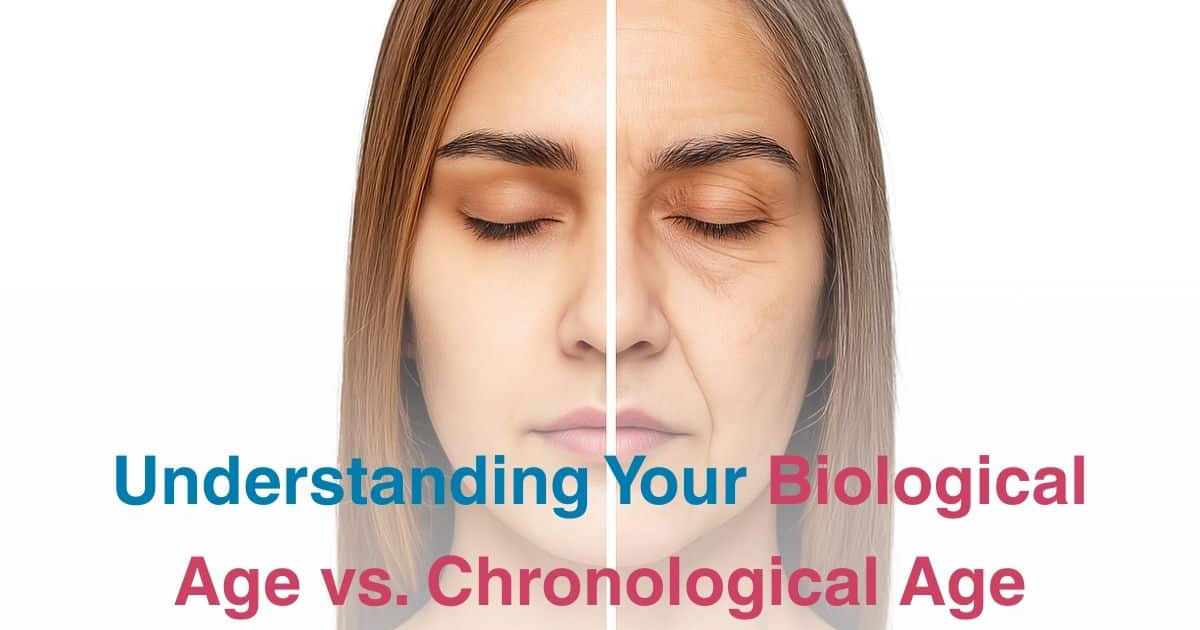
In 2026, the calendar on your wall is becoming less relevant than the biological data in your cells. While your Chronological Age is a fixed number based on your birth date, your Biological Age is a dynamic, actionable metric that reflects the actual rate at which your body is wearing down.
Thanks to the rise of Epigenetic Clocks, we can now measure this “internal age” with pinpoint accuracy. This guide explores the newest 2026 breakthroughs in longevity science and how you can use tech-tracked habits to turn back your biological clock.
Biological Age vs. Chronological Age: The 2026 Guide to Epigenetic Clocks
For decades, aging was viewed as an inevitable, linear decay. But the emergence of Geroscience has revealed that aging is a modifiable biological process. The “Holy Grail” of this field is the Epigenetic Clock a biochemical test that measures DNA methylation (chemical tags on your DNA) to determine how fast you are truly aging.
The 4 Generations of Epigenetic Clocks
In 2026, we have moved beyond basic testing. Understanding which “generation” of clock you are using is vital for accurate biohacking:
- 1st Gen (The Pioneers): Like the original Horvath Clock, these were trained to predict chronological age. They proved that DNA changes over time but weren’t great at predicting health.
- 2nd Gen (The Predictors): Clocks like GrimAge and PhenoAge are the current clinical gold standards. They don’t just look at time; they predict mortality risk and “healthspan” (the years you remain disease-free).
- 3rd Gen (The Speedometers): The DunedinPACE clock is a breakthrough “speedometer.” Instead of telling you how old you are, it tells you how fast you are currently aging (e.g., aging 0.8 years for every 1 calendar year).
- 4th Gen (The Causal Clocks): The newest 2026 arrivals, like CausAge, distinguish between DNA changes that cause aging and those that are just along for the ride. These are used to test if a specific supplement or habit is actually working.
Tech-Tracked Habits to Lower Your Biological Age
The most exciting discovery of 2026 is that biological age is reversible. Through “Micro-Interventions” tracked by wearables and apps, you can actively decelerate your aging pace.
1. Optimize Your “Weights-to-Cardio” Ratio
Resistance training is the ultimate anti-aging drug. 2026 data shows that lifting weights 3x a week triggers biological reactions that clear oxidative stress.
- The Tech Habit: Use an Oura Ring or Whoop to monitor your Strain vs. Recovery. Pushing too hard creates systemic inflammation (aging you), while too little leads to muscle wastage.
2. The “Glucose Stability” Protocol
Spikes in blood sugar lead to glycation, which “rusts” your proteins and accelerates epigenetic aging.
- The Tech Habit: Wear a Continuous Glucose Monitor (CGM). Aim to keep your post-meal spikes under 140 mg/dL. Stable glucose is one of the fastest ways to improve your PhenoAge score.
3. Precision Senolytics and “Zombie Cell” Clearing
A major 2026 trend is the use of natural senolytics like Fisetin and Quercetin. These compounds help the body flush out “senescent” (zombie) cells that secrete inflammatory signals.
- The Tech Habit: Use a longevity app like InsideTracker or Function Health to track markers like hs-CRP (inflammation). When inflammation drops, your biological age follows.
The SilverScoop Summary: Measuring What Matters
In 2026, “getting older” is a choice of management. By testing your DunedinPACE annually and using a CGM and biometric wearable daily, you transition from a passive observer of time to an active engineer of your own biology.
The Insight: Your chronological age is a fact, but your biological age is a performance metric. Treat it like one.
Recommended Readings: Longevity Tech: The New Wearables to Extend Your Healthspan
FAQs
Q: Can I really reverse my biological age?
A: Yes. Clinical trials using “The Helfgott Protocol” (diet, sleep, and exercise) have shown a reversal of up to 3 years in biological age within just 8 weeks.
Q: Which epigenetic clock is the most accurate?
A: For predicting how long you will live, GrimAge is the leader. For seeing if your current lifestyle is working today, DunedinPACE is the superior “speedometer.”
Have any thoughts?
Share your reaction or leave a quick response — we’d love to hear what you think!
-
 0
0
-
 0
0
-
 0
0
-
 0
0
-
 0
0
-
 0
0