

Table of Contents
The Rise of “Physical AI”: Moving Beyond Chatbots to AI That Folds Your Laundry and Manages Your Home’s Energy
For the past few years, artificial intelligence has felt like a disembodied voice in our pockets or a clever text box on our screens. We’ve grown accustomed to “Digital AI” the chatbots that write emails and generate images. But as we step into 2026, the paradigm is shifting.
We are entering the era of Physical AI (also known as Embodied AI).
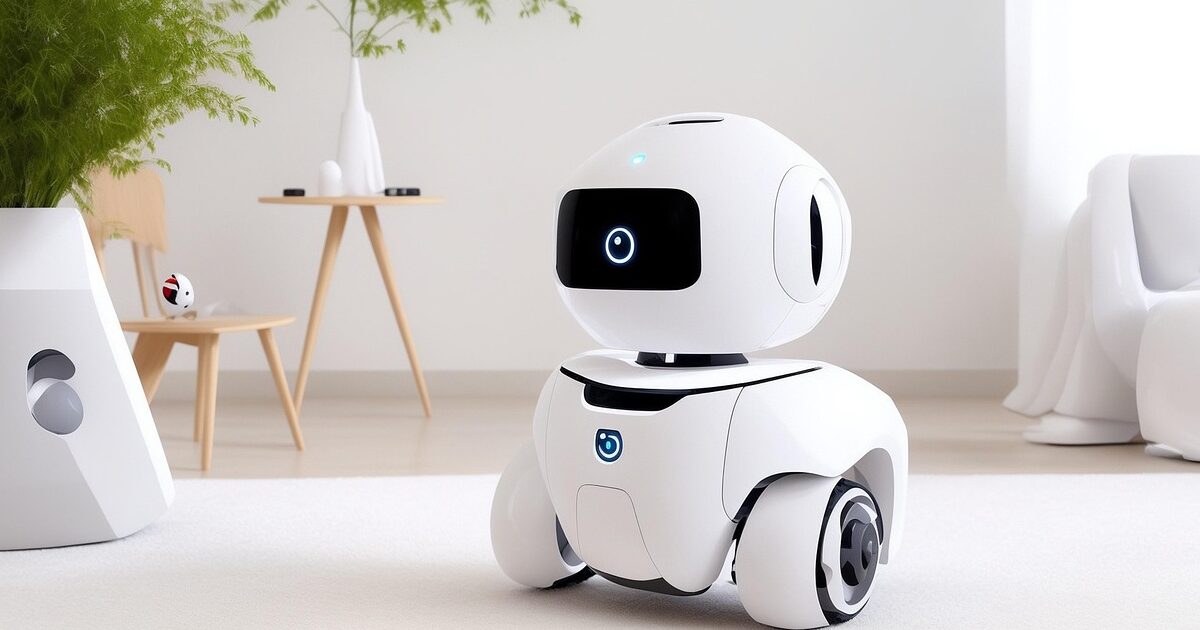
Unlike its digital predecessors, Physical AI doesn’t just process information; it interacts with the physical world. It has a body, sensors, and actuators. It doesn’t just tell you how to save energy; it actively manages your smart grid. It doesn’t just provide a recipe; it folds the laundry while the oven preheats itself.
What is Physical AI?
Physical AI is the integration of advanced machine learning models into physical hardware—robots, appliances, and home infrastructure. While traditional AI lives on servers, Physical AI operates in closed-loop systems:
- Perception: It “sees” and “feels” the environment through LiDAR, cameras, and tactile sensors.
- Decisioning: It uses on-device edge computing to make millisecond decisions without cloud latency.
- Action: It executes physical tasks through motors, robotic arms, and smart switches.
1. The End of Chores: AI That “Does” Instead of “Talks”
The “killer app” of Physical AI in 2026 is the automation of high-fatigue domestic tasks. We are moving beyond the simple Roomba to multi-tasking domestic robots.
- Laundry Management: New-generation robots can now sort fabrics, detect stains using hyperspectral imaging, and utilize fine-motor skills to fold clothes with human-like precision.
- Predictive Kitchens: AI isn’t just suggesting meals; it’s monitoring expiration dates and coordinating with smart appliances to begin meal prep before you even walk through the door.
2. Agentic Energy Management: Your Home as a Virtual Power Plant
With energy prices fluctuating and the rise of the Smart Grid, Physical AI is becoming the “Chief Operating Officer” of your home’s utility consumption.
- Dynamic Load Balancing: Your home’s AI now communicates directly with the local grid. It automatically shifts heavy electricity loads—like EV charging or dishwasher cycles to “trough” periods when prices are lowest or solar production is at its peak.
- Predictive Efficiency: By analyzing weather forecasts and your historical occupancy patterns, Physical AI “pre-cools” or “pre-heats” your home, reducing carbon footprints by up to 40%.
3. The “On-Device” Revolution: Privacy by Design
One of the biggest hurdles for Physical AI was the privacy concern of “cameras in the home.” In 2026, the breakthrough is On-Device Perception.
- TinyML and Edge Computing: Advanced models now run on less than 10W of power. This means your home robot processes visual data locally.
- The Result: Your laundry robot “sees” your clothes, but that data never leaves your four walls, ensuring that your most private spaces remain offline.
Physical AI vs. Traditional Smart Homes (2026 Comparison)
| Feature | Legacy Smart Home (2023-2024) | Physical AI Home (2026+) |
| Interaction | Voice Commands / App Taps | Intent Detection / Proactive Action |
| Logic | “If This, Then That” (Scripts) | Contextual Learning (Neural Nets) |
| Energy | Manual Scheduling | Real-time Grid Interaction |
| Physicality | Static Sensors | Mobile Actuators (Robotics) |
| Privacy | Cloud-Dependent | On-Device / Edge-Native |
Why 2027 is the “Mainstream” Year
While high-end homes are already adopting these systems, market forecasts suggest that Embodied AI will grow from a $4.4 billion industry to over **$23 billion by 2030**.
- Standardization: The widespread adoption of the Matter protocol has finally allowed different brands of physical AI to “talk” to each other.
- Cost Reduction: The price of robotic actuators and high-precision sensors has dropped by 60%, making “laundry-folding” tech accessible to the upper-middle class.
Final Thought: From Assistant to Partner
Physical AI represents the final bridge between the digital and the material. We are moving away from technology that we use and toward technology that cohabitates with us. In 2026, your home isn’t just “smart” it’s an intuitive partner that handles the mundane, so you can focus on the meaningful.
Recommended Readings: The Rise of “Privacy-First” AI |
Frequently Asked Questions: Physical AI
Q1: What is the main difference between Physical AI and a chatbot? A chatbot (Digital AI) is advisory; it processes text and provides information. Physical AI is operational; it has a physical form (like a robot or smart appliance) and can execute tasks in the real world, such as moving objects or adjusting hardware.
Q2: Will Physical AI robots be able to do all my chores? By 2026, Physical AI excels at repetitive, high-fatigue tasks like sorting laundry, vacuuming, and managing energy. However, complex tasks requiring high emotional intelligence or nuanced “handyman” repairs still require human intervention.
Q3: Is Physical AI safe for my privacy? The 2026 trend for Physical AI is Edge Computing. Most modern home robots process their “vision” and sensor data locally on the device itself, meaning your private household data is not uploaded to the cloud.
Have any thoughts?
Share your reaction or leave a quick response — we’d love to hear what you think!
-
 0
0
-
 0
0
-
 0
0
-
 0
0
-
 0
0
-
 0
0