

Table of Contents
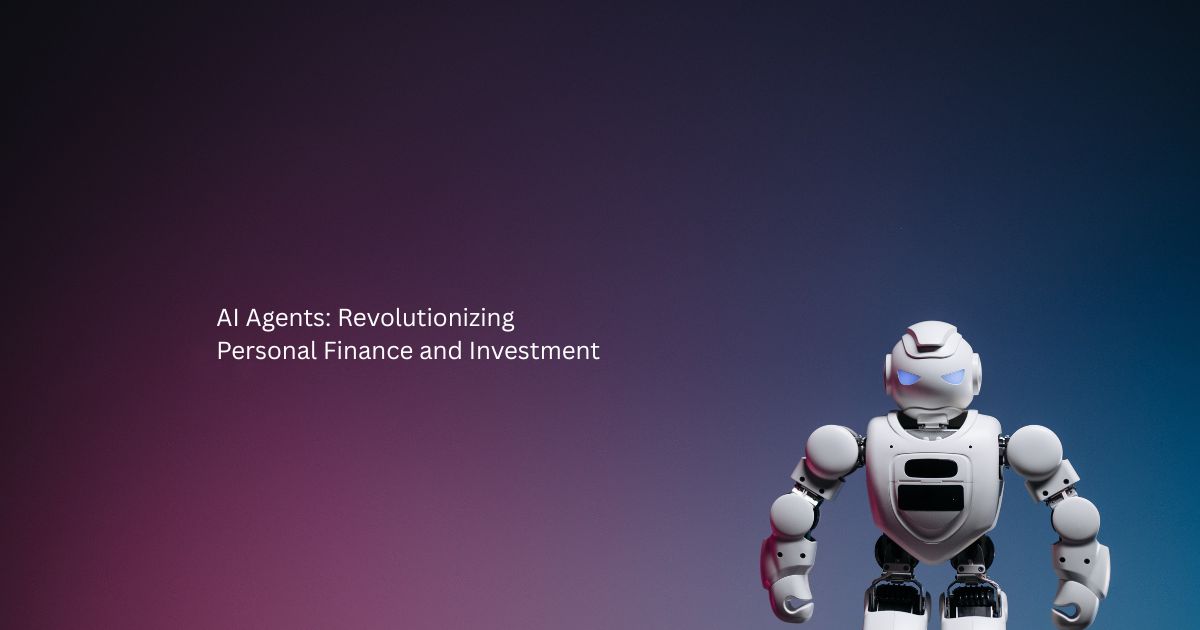
The Rise of AI Agents: How Autonomous Programs Will Revolutionize Personal Finance and Investment
In the rapidly evolving world of artificial intelligence, a new frontier is emerging: AI agents. These aren’t just intelligent tools; they are autonomous programs capable of making decisions, taking actions, and even learning from their environment without constant human oversight. While still in their early stages, AI agents are poised to fundamentally transform how we manage our personal finances and execute investment strategies.
Forget traditional budgeting apps and static financial advice. Imagine a future where your financial life is not just assisted by AI, but actively managed by a personalized, intelligent entity working tirelessly on your behalf. This isn’t science fiction; it’s the near future.
What Exactly Are AI Agents?
Unlike the large language models (LLMs) we’re familiar with (like ChatGPT), which respond to prompts, AI agents are designed with specific goals in mind. They can:
- Plan: Break down complex objectives into actionable steps.
- Execute: Interact with other software, APIs, and online services to carry out tasks.
- Monitor: Observe results, detect changes, and identify new opportunities or threats.
- Learn: Adapt their strategies based on outcomes and new information.
Think of them as highly specialized digital employees for your money.
Transforming Personal Finance Management
For the average individual, managing personal finances can be overwhelming. Budgets go awry, bills are forgotten, and financial goals often remain distant. AI agents promise to change this dynamic entirely.
- Hyper-Personalized Budgeting & Spending Optimization:
- An AI agent could analyze your spending habits in real-time across all accounts, identify subscriptions you don’t use, negotiate lower utility bills, or even recommend the most cost-effective grocery purchases based on your shopping list and local deals.
- It won’t just tell you where you’re overspending; it will act to correct it, perhaps by automatically transferring surplus funds to savings or suggesting a pause on discretionary spending when approaching a budget limit.
- Keywords: AI personal finance, automated budgeting, spending optimization, financial AI assistant.
- Proactive Bill Management and Debt Reduction:
- No more late fees. An agent can track all your bills, pay them on time, and even identify opportunities to consolidate high-interest debt or refinance loans when rates are favorable, initiating the process on your behalf.
- Keywords: AI bill payment, automated debt management, smart financial assistant, proactive finance.
- Goal-Oriented Savings & Wealth Building:
- Want to save for a down payment, retirement, or your child’s education? An AI agent can dynamically adjust your savings contributions based on your income, expenses, and market conditions, ensuring you’re always on track. It can even seek out the highest-yield savings accounts or short-term investment vehicles.
- Keywords: AI wealth management, automated savings, financial goal setting, smart investment assistant.
Revolutionizing Investment Strategy
The impact of AI agents on investment will be even more profound, moving beyond algorithmic trading to truly autonomous, responsive portfolio management.
- Dynamic Portfolio Optimization & Rebalancing:
- Current robo-advisors offer automated rebalancing, but AI agents will take this to the next level. They can constantly monitor global markets, economic indicators, and geopolitical events, dynamically adjusting asset allocations to minimize risk and maximize returns based on your specific risk tolerance and financial goals.
- They could identify emerging sectors, adjust positions based on real-time news sentiment, and execute trades without manual intervention.
- Keywords: AI investment strategy, autonomous trading, dynamic portfolio management, AI rebalancing, algorithmic investing.
- Hyper-Personalized Investment Opportunities:
- An AI agent could scour thousands of investment opportunities, from traditional stocks and bonds to alternative assets like real estate crowdfunding, peer-to-peer lending, or even venture capital opportunities, presenting only those that perfectly align with your values, ethics, and financial objectives.
- It could assess the ESG (Environmental, Social, Governance) scores of companies and build a portfolio that reflects your commitment to sustainable investing.
- Keywords: ESG investing AI, personalized investment, alternative investments AI, ethical investing.
- Risk Management and Anomaly Detection:
- These agents can identify subtle patterns and anomalies in market data that human analysts might miss, potentially flagging impending market corrections or identifying undervalued assets before they become mainstream. They can stress-test your portfolio against various economic scenarios and suggest hedges.
- Keywords: AI risk management, market anomaly detection, predictive analytics finance, investment intelligence.
The Road Ahead: Challenges and Opportunities
While the potential is immense, several challenges remain. Security and privacy are paramount, as these agents will have access to sensitive financial data. Regulatory frameworks will need to evolve, and the ethical implications of fully autonomous financial decision-making must be carefully considered.
However, the opportunities for enhanced financial well-being, reduced stress, and more efficient wealth creation are undeniable. AI agents promise to democratize sophisticated financial planning, making expert-level management accessible to everyone, not just the ultra-rich.
Conclusion: Your Future Financial Co-Pilot
The rise of AI agents isn’t just another technological upgrade; it’s a paradigm shift. They represent a future where your financial life is smarter, more responsive, and genuinely optimized for your success. As these autonomous programs become more sophisticated, they will move from being helpful tools to indispensable financial co-pilots, steering you confidently towards your financial aspirations.
Are you ready for your money to work smarter, autonomously? The age of the AI financial agent is dawning.
Recommended Reading: A. Digital Detox Paradox: Use Tech to Fight Burnout & Set Boundaries | B. Matter: The New Standard for Smart Home Compatibility Explained
❓ Frequently Asked Questions (FAQ)
Q1: What is the difference between a traditional financial app/robo-advisor and an AI Agent?
A: A traditional app or robo-advisor typically provides static advice or executes trades based on a pre-set algorithm and your input. An AI Agent is an autonomous program that can set goals, dynamically make complex decisions, interact with multiple online services (like billers or banks), learn from outcomes, and actively execute financial tasks on your behalf without constant human instruction.
Q2: Is using an AI Agent for my finances safe and secure?
A: Security and data privacy are the most critical concerns. Reputable financial AI Agents utilize military-grade encryption, adhere to strict data privacy laws, and often use multi-factor authentication. However, as with any online financial service, users must vet the provider carefully and understand their data sharing policies.
Q3: Can an AI Agent handle complex investment strategies like options trading or alternative assets?
A: Yes. Unlike simpler robo-advisors, advanced AI Agents are designed to handle complex, dynamic strategies that involve real-time market monitoring, risk modeling, and sophisticated execution. They can increasingly assess and integrate alternative investments like private equity, real estate crowdfunding, and even crypto assets into a balanced portfolio tailored to the user’s risk profile.
Q4: Will AI Agents completely replace human financial advisors?
A: AI Agents will automate the majority of transactional, analytical, and execution tasks, making financial management more efficient and affordable. However, human financial advisors will remain crucial for complex life events (e.g., estate planning, tax optimization, succession planning) and for providing the emotional support and psychological coaching necessary during major market volatility. They will likely become “co-pilots” working alongside AI tools.
Have any thoughts?
Share your reaction or leave a quick response — we’d love to hear what you think!
-
 0
0
-
 0
0
-
 0
0
-
 0
0
-
 0
0
-
 0
0