

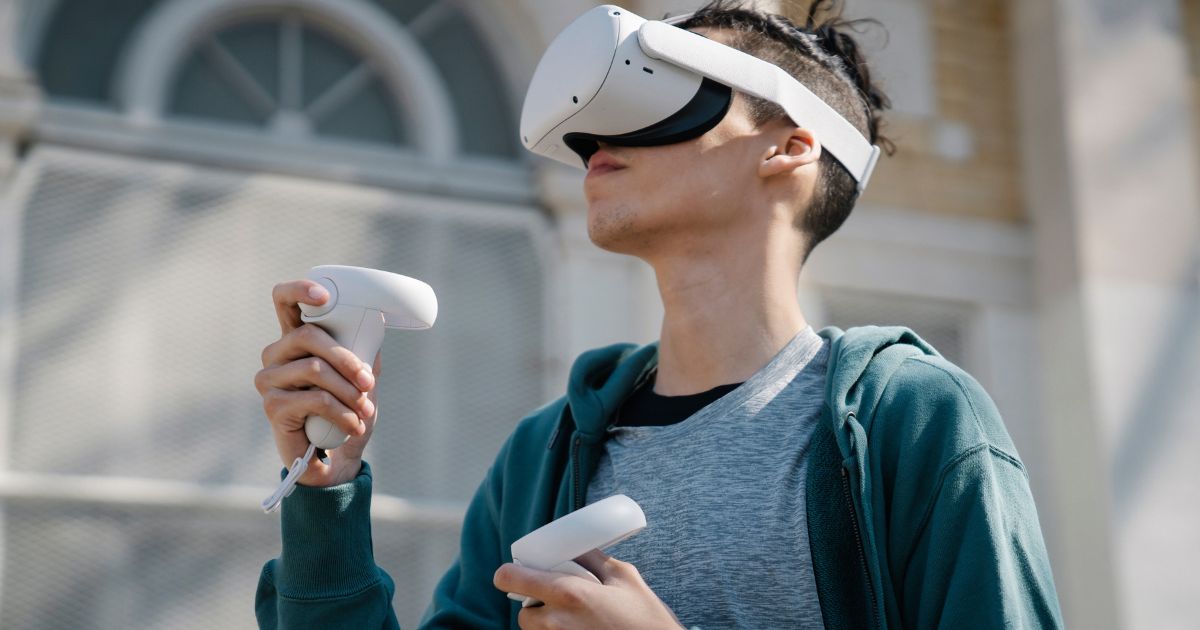
A Deep Dive into the Latest Advancements in Virtual Reality
Virtual reality (VR) is no longer a futuristic fantasy it’s a rapidly evolving technology that’s redefining how we interact with digital worlds. After years of being driven primarily by gaming enthusiasts, VR technology is now maturing into a powerful platform with real-world applications. The latest advancements have pushed the boundaries of what’s possible, making immersive experiences more accessible, intuitive, and visually stunning than ever before. This article takes a deep dive into the latest advancements in virtual reality and explores the trends shaping its future.
1. Hardware Breakthroughs: Lighter, Smarter, and More Accessible Headsets
The most noticeable improvements in VR have been in hardware. The bulky, tethered headsets of the past are being replaced by sleek, powerful, and user-friendly devices.
- Meta Quest 3: This headset has cemented its place as the market standard for consumer VR. It offers an excellent balance of power, a rich content library, and mixed reality capabilities thanks to its color passthrough cameras.
- Apple Vision Pro: Positioned at the premium end of the market, the Vision Pro is a productivity and content-consumption powerhouse. It stands out for its exceptional display clarity, advanced gesture recognition, and seamless integration with the Apple ecosystem, targeting creative professionals and high-end users.
- PlayStation VR2: For console gamers, the PS VR2 remains the benchmark. Exclusively for the PlayStation 5, it delivers an immersive gaming experience with its high-resolution OLED display, eye-tracking system, and haptic feedback in its controllers, adding a new layer of realism.
- Pico 4 & Meta Quest 3S: These devices have made VR more accessible than ever, offering a high-quality entry point for beginners. They are lightweight, comfortable, and feature an inside-out tracking system, eliminating the need for external sensors.
These new-generation headsets are paving the way for wider adoption by making VR more comfortable and less cumbersome.
2. The Power of Software and AI: A Leap in Immersion
While hardware has made VR more comfortable, software and AI are making it smarter and more immersive. The experience is no longer a simple simulation but an intelligent, reactive environment.
- AI-Powered Experiences: Artificial intelligence is being integrated into VR to create dynamic and personalized worlds. AI-powered non-playable characters (NPCs) can now react to a user’s input in real time, making interactions more lifelike. Moreover, AI-generated 3D assets and environments are significantly reducing the time and cost of content creation, speeding up the development of rich virtual worlds.
- Full-Body and Hand Tracking: New software and sensors are enabling incredibly precise tracking of a user’s hands and body without the need for controllers. This allows for more natural interactions, from gesturing to manipulating virtual objects with your fingers. This is a huge step toward creating a truly intuitive user interface.
- The Rise of the Metaverse: Platforms are evolving into shared social spaces where users can meet, collaborate, and create together. Services like VR Chat and Meta Horizon Worlds are becoming digital hubs for communities, events, and work, moving the focus of VR from a solitary experience to a social one.
3. Beyond Gaming: VR’s Transformative Impact on Industries
While gaming remains a primary driver, the most significant long-term growth for virtual reality is occurring in professional fields. Businesses are leveraging VR for training, collaboration, and design, unlocking immense value.
- Healthcare: VR is revolutionizing medical training. Surgeons can practice complex procedures in a risk-free virtual environment, improving their skills before they ever touch a real patient. It is also used for pain management, phobia therapy, and physical rehabilitation, offering immersive, distraction-based treatments.
- Education: Students can now step into history, explore the solar system, or conduct virtual chemistry experiments from their classroom. VR creates highly engaging and interactive learning experiences that are not possible with traditional textbooks.
- Engineering and Manufacturing: Companies like Ford and Siemens use VR for virtual prototyping. Engineers can design and test products in a simulated environment, identifying flaws and optimizing designs before committing to expensive physical prototypes. This dramatically reduces costs and accelerates the development cycle.
- Real Estate: Virtual reality is changing how we buy and sell property. Potential buyers can take immersive virtual tours of homes and commercial buildings from anywhere in the world, allowing them to visualize spaces and even customize layouts in real time.
4. The Path to Mainstream Adoption
Despite the incredible progress, VR still faces hurdles before it becomes as common as a smartphone or a PC.
- Cost and Accessibility: While devices like the Pico 4 have made VR more affordable, the cost of a high-end setup (headset, PC, and peripherals) remains a barrier for many consumers.
- Content Library: While the content ecosystem is growing, the industry still needs “killer apps” that are compelling enough to make VR an essential part of daily life for the average user, much like social media and web browsing drove smartphone adoption.
- Comfort and Ergonomics: Although headsets are getting lighter, prolonged use can still cause fatigue or discomfort. Future devices must continue to prioritize ergonomics to appeal to a wider audience.
- Interoperability: The lack of a universal standard has created fragmented ecosystems. The adoption of open standards like Matter will be critical for seamless integration between devices, regardless of the brand.
My Conclusion: The Future is Now
The latest advancements in virtual reality have laid the groundwork for a truly transformative era. With smarter hardware, more intuitive software, and a growing number of real-world applications, VR is no longer just a gadget for gamers. It is a powerful tool for education, collaboration, and design that is poised to change how we live and work. While some challenges remain, the rapid pace of innovation suggests that a future where VR is an indispensable part of our lives is closer than we think.
❓Frequently Asked Questions (FAQ)
Recent advancements include a new generation of lighter and more powerful headsets like the Meta Quest 3, Apple Vision Pro, and PlayStation VR2, which offer higher resolution, better ergonomics, and integrated mixed-reality capabilities.
AI is making VR experiences smarter by powering more realistic and reactive non-playable characters (NPCs) and speeding up content creation. It also enables advanced features like full-body and hand tracking without the need for controllers.
No, VR is expanding into many professional fields. It’s being used for medical training, educational tools, virtual product prototyping in engineering, and creating immersive virtual tours for the real estate industry.
Key challenges include the high cost of some hardware, the need for more “killer apps” to drive adoption, and ongoing concerns about user comfort, security, and the need for a more standardized, interoperable ecosystem.
Have any thoughts?
Share your reaction or leave a quick response — we’d love to hear what you think!
-
 0
0
-
 0
0
-
 0
0
-
 0
0
-
 0
0
-
 0
0