

Table of Contents
For years, our interactions with Artificial Intelligence have been confined to glowing screens. We type a prompt into a chatbot, generate an image, or let an algorithm organize our calendars. The AI is “somewhere out there” in the cloud disembodied, intangible, and safely contained.
But that reality is shifting rapidly.
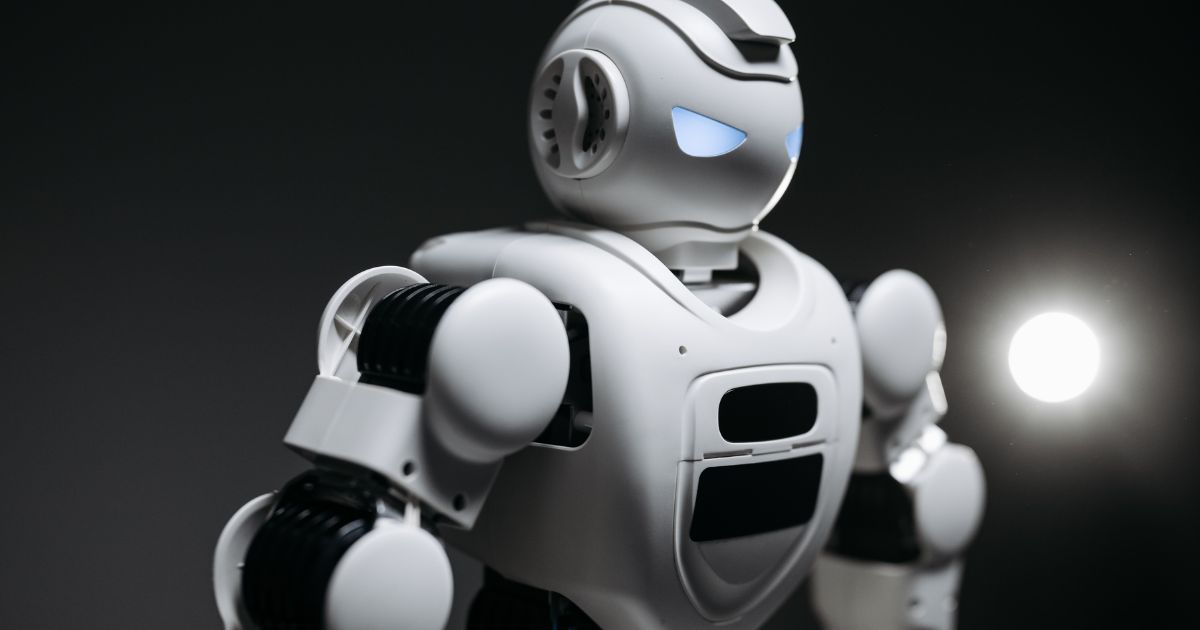
We are officially entering the era of Physical AI (often called embodied AI). Thanks to massive breakthroughs in robotics, computer vision, and spatial computing, AI is finally breaking free from the digital world and getting a physical body. From humanoid workers walking factory floors to autonomous delivery drones navigating our streets, AI is about to share our physical space.
While this promises to revolutionize industry and daily life, it also introduces a massive, unprecedented wave of moral dilemmas. What happens when software can touch, move, and potentially harm the real world?
Let’s dive into the critical ethical questions of embodied AI.
1. The Accountability Gap: Who Blames Whom?
When a digital AI chatbot hallucinates and gives you a bad recipe, it’s an annoyance. When a 300-pound humanoid robot carrying heavy machinery suffers a software glitch, it’s a workplace catastrophe.
This introduces a massive legal and ethical question: Who is responsible when Physical AI causes real-world damage or injury?
- The Software Developer: Did a bug in the code cause the accident?
- The Hardware Manufacturer: Did a mechanical sensor fail to detect a human standing nearby?
- The Owner/User: Did the supervisor fail to calibrate the robot correctly?
As physical AI becomes more autonomous, traditional product liability laws won’t cut it. We urgently need updated global standards to define accountability before these machines become a staple in our homes and offices.
2. The Deception of Form: The Anthropomorphism Trap
Humans are hardwired to anthropomorphize, we give names to our cars, talk to our plants, and put googly eyes on vacuum cleaners. When AI takes on a highly realistic human form, our psychological boundaries blur.
Companies are intentionally designing humanoid robots to look approachable, complete with expressive faces and polite voice tones. However, this raises serious ethical concerns regarding emotional manipulation, particularly for vulnerable populations:
The Risk: Children and the elderly may form genuine emotional attachments to physical AI, treating them as sentient companions rather than proprietary corporate software.
If a robot is programmed to subtly nudge a user toward buying certain products or adopting specific political views, the potential for exploitation is massive. Physical presence creates an illusion of trust that digital text on a screen simply cannot match.
3. Physical Safety and the “Right to Coexist”
In digital spaces, you can close a tab, block an account, or delete an app if you feel unsafe. In the physical world, you can’t simply “turn off” your neighbor’s autonomous delivery drone or the robotic security guard patrolling your local mall.
The deployment of physical AI challenges our fundamental right to safe, unmonitored public spaces.
- Constant Surveillance: Embodied AI requires a massive array of cameras, LiDAR, and microphones to navigate the world. By walking past a physical AI robot, your biometric data is likely being scanned and processed in real-time.
- Unpredictable Environments: Unlike a predictable factory floor, human environments are chaotic. Designing an AI that can perfectly predict human behavior—like a child suddenly darting into the street—remains one of the steepest engineering and ethical hurdles.
4. Labor Displacement: Beyond the White-Collar Cubicle
The first wave of generative AI shook up creative and white-collar industries (writers, coders, graphic designers). Physical AI is coming for the blue-collar sector.
Humanoid robots are already being trialed in warehousing, logistics, manufacturing, and hospitality. While tech companies argue that robots will only take over the “dirty, dull, and dangerous” jobs, the economic reality is more complex. Without a thoughtful transition plan, the rapid rollout of physical AI could lead to sudden, widespread displacement of manual laborers, deepening economic inequality.
Moving Forward: Ethics by Design
We cannot afford to treat the safety and ethics of Physical AI as an afterthought. To ensure a harmonious future where humans and robots coexist, tech leaders and policymakers must prioritize three pillars:
- Strict Kinetic Boundaries: Implementing hardware-level kill switches and physical force limitations that prevent robots from exerting harmful pressure.
- Transparent Data Harvesting: Clear indicators (like a physical light or signal) showing when a robot is actively recording or transmitting environmental data.
- Human-in-the-Loop Frameworks: Ensuring that critical physical decisions especially in healthcare, law enforcement, and heavy industry always require human verification.
The physical embodiment of AI is an incredible testament to human ingenuity. But as we give machines hands to build and legs to walk, we must ensure they are guided by a robust, unshakeable ethical compass.
What Do You Think?
Would you feel comfortable sharing your workplace or home with a fully autonomous humanoid robot? Let us know your thoughts in the comments below!
For more insights into how technology is reshaping our daily lives, check out our deep dive on The Future of Decentralized Tech on Silverscoopblog and explore the latest global standards on AI governance over at the World Economic Forum.
Frequently Asked Questions
What is Physical AI?
Physical AI, also known as embodied AI, refers to artificial intelligence systems that are integrated into physical bodies (like humanoid robots, drones, and autonomous vehicles) allowing them to interact with, move through, and alter the physical world.
How does Physical AI differ from traditional AI?
Traditional AI operates purely in digital environments (like chatbots, data analytics, and image generators) and relies on human input to affect the real world. Physical AI uses sensors, computer vision, and actuators to navigate and physically manipulate its surroundings autonomously.
What are the main ethical concerns of embodied AI?
The primary ethical concerns include physical safety and liability (who is to blame if a robot causes harm), psychological manipulation due to humans anthropomorphizing humanoids, data privacy violations via constant environmental surveillance, and blue-collar labor displacement.
Who is legally liable if an autonomous robot causes an injury?
Currently, legal frameworks are vague. Liability could fall on the software developer for a coding glitch, the hardware manufacturer for a sensor failure, or the owner/operator for improper calibration. Regulators are actively working to establish clear product liability laws specifically for autonomous physical systems.
Have any thoughts?
Share your reaction or leave a quick response — we’d love to hear what you think!
-
 0
0
-
 1
1
-
 0
0
-
 0
0
-
 0
0
-
 0
0