
Table of Contents
In the hyper-competitive landscape of 2026, the old “growth at all costs” mantra is failing. The “Burn and Churn” model that defined the last decade of Silicon Valley is being replaced by a more resilient, ethically grounded, and ultimately more profitable framework.
Enter The Dharma of Disruption.
This isn’t just a buzzword; it is the strategic application of Conscious Capitalism to the startup ecosystem. By aligning a company’s core purpose with the well-being of all stakeholders not just shareholders founders are finding a faster, more sustainable path to the finish line.
What is the “Dharma” of a Startup?
In traditional philosophy, Dharma refers to the inherent nature of a thing, its “rightful path” or duty. When applied to modern business, it means a startup must exist for a reason beyond its exit strategy.
For years, disruption meant breaking things. Today, Dharma-led disruption means fixing things. Startups that solve systemic problems like the loneliness epidemic, metabolic health crises, or environmental degradation are attracting the most loyal talent and the most “patient” capital.
Why Conscious Capitalism is Outperforming Traditional Models
1. The Talent Magnet: Values Over Vacations
The modern workforce, particularly Gen Z and Gen Alpha, is looking for more than a paycheck and a ping-pong table. They are looking for Meaning.
- The Data: Conscious companies see 25–40% higher employee retention rates.
- The Result: Lower turnover costs and a “mission-aligned” team that innovates harder because they believe in the why behind the code.
2. Radical Brand Loyalty in the “Attention Economy”
In an era of AI-generated noise, consumers are gravitating toward brands with a soul. Conscious Capitalism builds “Brand Equity” that money can’t buy. When your disruption serves a higher purpose, your customers become your disciples.
3. Resilience Against Market Volatility
Startups built on “Conscious” foundations tend to have more sustainable unit economics. By focusing on long-term stakeholder value rather than short-term quarterly “hacks,” these companies are better equipped to survive economic downturns that wipe out “growth-only” competitors.
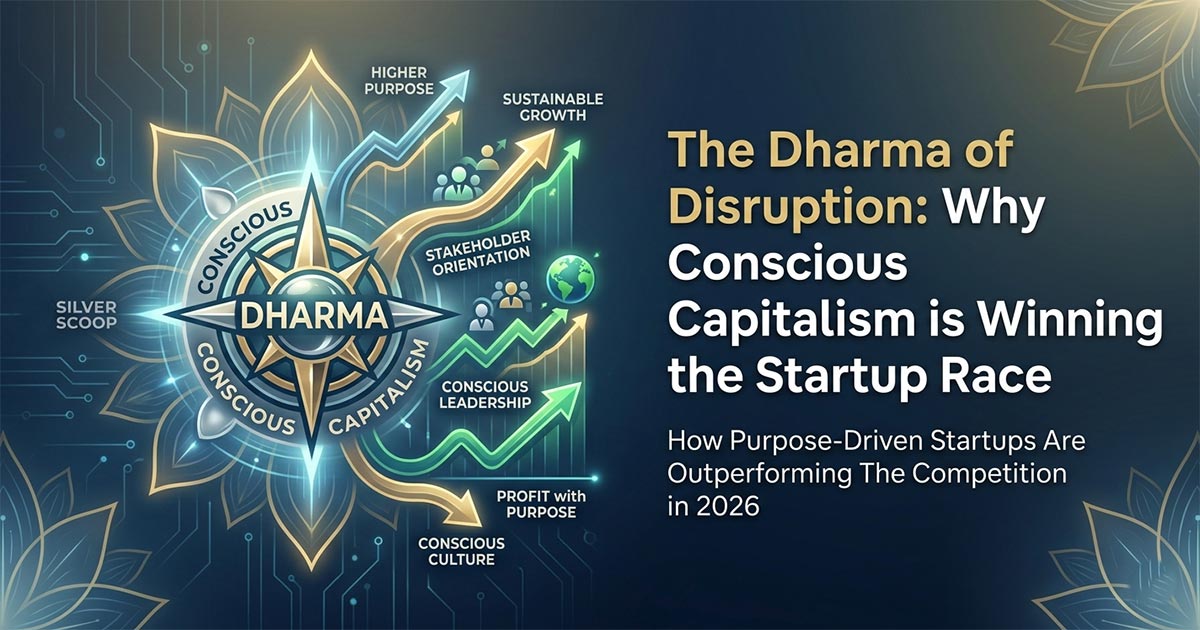
The 4 Pillars of Conscious Disruption
To win the startup race in 2026, your “Dharma” must be integrated into these four areas:
- Higher Purpose: Profit is the fuel, but purpose is the destination. What is the one world problem your SaaS or hardware is destined to solve?
- Stakeholder Integration: Your “ecosystem” includes your employees, suppliers, customers, and the environment. If one of them loses for you to win, your model is fragile.
- Conscious Leadership: Moving from “Command and Control” to “Mentor and Inspire.”
- Conscious Culture: Creating a “Sattvic” (pure/balanced) workspace that prioritizes the mental and physical longevity of the founders and the team.
How to Implement the Dharma Model Today
- Audit Your “Why”: If you removed the “exit” from your 5-year plan, would you still want to build this company?
- Transparent Supply Chains: Use blockchain or open audits to show exactly how your product is made.
- Cognitive Longevity: Implement “High-Prana” policies no-meeting Wednesdays, deep-work blocks, and biohacking perks that actually improve life quality.
Conclusion: The Winner Takes All (The Good)
The race is no longer just about who is the fastest; it’s about who can stay in the race the longest without burning out or selling out. Conscious Capitalism is the ultimate “cheat code” for the modern founder. By following your startup’s Dharma, you don’t just disrupt an industry you elevate it.
“Are you a founder, creator, or seeker living in the Braj region? Reach out to us – we want to tell your story in the next Dispatch.”
Consult with Us at – SilverScoopBlog Contact
Frequently Asked Questions?
1. What is the Dharma of Disruption?
The Dharma of Disruption is a business philosophy that combines the ancient concept of Dharma (rightful purpose) with modern innovation. It suggests that startups should disrupt industries not just for profit, but to fulfill a higher ethical or societal duty.
2. How does Conscious Capitalism differ from Corporate Social Responsibility (CSR)?
While CSR is often an “add-on” or a department within a traditional company, Conscious Capitalism integrates purpose into the very DNA of the business model. It focuses on creating value for all stakeholders employees, customers, and the planet simultaneously.
3. Why is Conscious Capitalism more profitable for startups?
It leads to significantly higher employee retention, lower marketing costs due to intense brand loyalty, and attracts “patient capital” from investors looking for long-term resilience rather than short-term exits.
4. Can a tech startup practice Conscious Capitalism?
Absolutely. Tech startups can practice it by prioritizing user privacy, ethical AI development, and creating a “Sattvic” or balanced workspace that prevents developer burnout.
Have any thoughts?
Share your reaction or leave a quick response — we’d love to hear what you think!
-
 1
1
-
 1
1
-
 0
0
-
 0
0
-
 0
0
-
 0
0