

Table of Contents
In 2026, the digital landscape has shifted. If you’re scrolling through Instagram or TikTok today, March 5, there’s a high statistical probability that the “celebrity” you just liked isn’t breathing. They don’t eat, they don’t sleep, and they certainly don’t have “bad hair days.”
Welcome to the era of Synthetic Influencers.
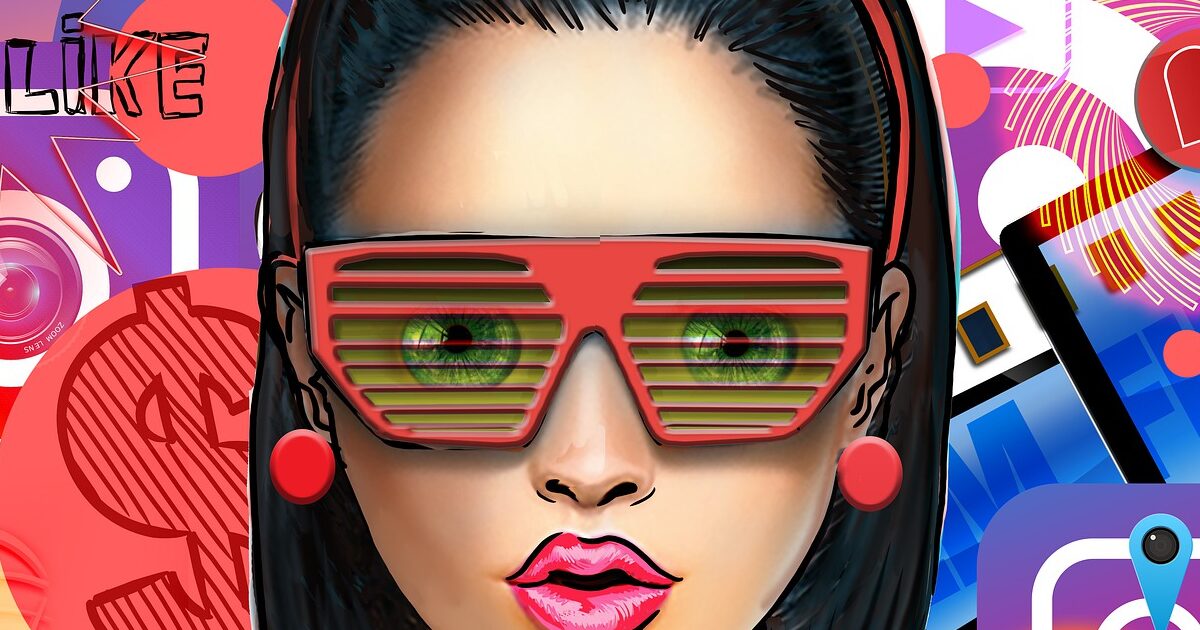
Synthetic Influencers: Why Your Favorite New Celebrity Might Not Be Human
The “Influencer” archetype is undergoing a radical evolution. We’ve moved past the era of the relatability of the “girl next door” and into the era of the Algorithmically Perfect. In 2026, virtual influencers like Lil Miquela, Aitana López, and Aisha Neo aren’t just tech experiments they are a $15.9 billion market force projected to skyrocket to $60 billion by 2030.
1. The Rise of the “Pixel-Perfect” Ambassador
A synthetic influencer is a computer-generated persona powered by 3D modeling (like Unreal Engine’s Meta Humans) and Generative AI. They possess distinct personalities, backstories, and even political stances.
Why Brands are Swiping Right on AI:
- Total Brand Safety: A synthetic influencer won’t get “canceled” for a controversial tweet from 2012. They are 100% controllable, 24/7.
- Scalability: An AI influencer can be in Tokyo, Paris, and New York simultaneously, speaking 40 different languages fluently.
- Lower Long-Term Costs: While the initial “birth” of a high-fidelity avatar is an investment, they don’t demand raises, business-class flights, or “creative breaks.”
2. The Trust Paradox: Can We Bond with Code?
You might think humans would reject a fake persona, but the data suggests otherwise. According to 2026 consumer sentiment reports, Gen Z and Gen Alpha actually find AI influencers more objective than their human counterparts.
“I know she’s not real, but her style advice is better than most humans because it’s backed by real-time trend data.” –Consumer Survey Participant, Feb 2026
The “Objective AI” Factor
In a world of “AI Slop” and “Aesthetic Exhaustion,” synthetic influencers represent a transparent form of artifice. Ironically, because we know they aren’t human, we don’t feel “betrayed” when they promote a product it’s seen as a curated digital performance rather than a fake “authentic” recommendation.
3. The Ethical Frontier: Regulations in 2026
As of February 2026, the regulatory landscape has finally caught up. New laws in India and the EU now mandate SGI (Synthetically Generated Information) labels.
- Mandatory Disclosure: Every post by a synthetic entity must carry a “Generated by AI” tag.
- The 3-Hour Rule: In major hubs, platforms are now required to take down unlabelled deepfakes or misleading synthetic media within 3 hours of a verified report.
- Unrealistic Standards: Critics argue that these “pixel-perfect” humans exacerbate body dysmorphia by setting a standard of beauty that is literally impossible for biological humans to achieve.
4. Human vs. Synthetic: Who Wins?
In 2026, the most successful brands are using a Hybrid Strategy. They use human influencers for “Emotional Depth” and “Messy Relatability,” while using Synthetic Influencers for high-concept, futuristic campaigns and 24/7 customer interaction.
| Feature | Human Influencer | Synthetic Influencer |
| Relatability | High (The “Human Struggle”) | Low (Too Perfect) |
| Control | Variable (Human Error) | 100% (Algorithm-led) |
| Availability | Limited (Needs Sleep) | Infinite (24/7/365) |
| Cultural Impact | Organic & Unpredictable | Engineered & Viral |
The Verdict: The Death of the “Real” Celebrity?
We aren’t seeing the death of the human celebrity; we are seeing the birth of a new Species of Content. In 2026, “vibe” is the currency, and if an algorithm can project a vibe better than a human, the market will follow the code.
Recommended Reading: The End of the Influencer? How “Virtual Humans” and AI avatars are taking over brand marketing.
The question for you is: Does it matter if the person you’re following is real, as long as the inspiration they provide is?
FAQs
Q: Are synthetic influencers real people behind an avatar?
A: No. While they are often managed by a team of human creators, the “person” you see is a 100% CGI (Computer Generated Imagery) entity powered by generative AI.
Q: Who is the most famous synthetic influencer in 2026?
A: Lil Miquela remains the pioneer, but newer avatars like Aitana López and Lu do Magalu (with millions of followers) are leading the charge in 2026.
Q: Do AI influencers have to disclose they aren’t human?
A: Yes. Under 2026 regulations (like India’s IT Rules amendment), all synthetic content that looks “real” must be clearly labeled as AI-generated to avoid deceiving the public.
Have any thoughts?
Share your reaction or leave a quick response — we’d love to hear what you think!
-
 0
0
-
 0
0
-
 0
0
-
 0
0
-
 0
0
-
 0
0